Clay Global
Clay Global is a San Francisco-based UX/UI and branding agency that leverages AI to design scalable, user-centric digital products and experiences.
View profile →Your go-to platform for discovering top-tier UX design agencies.
Clay Global is a San Francisco-based UX/UI and branding agency that leverages AI to design scalable, user-centric digital products and experiences.
View profile →
Mission Control is a UX/UI and web design agency that uses AI to build sleek, strategic digital experiences for fast-growing startups.
View profile →
Code and Theory is a New York-based digital agency blending creativity and engineering to build AI-enhanced products and brand experiences.
View profile →
Beyond is a New York-based digital agency delivering strategy, branding, and web solutions with over 30 years of experience.
View profile →
Bakken & Bæck is a Norway-based, multi-office design & technology studio founded in 2011 that builds digital products, software systems, and brand strategies from ideation to launch.
View profile →
Further, DesignStudio, is a global brand and design agency creating transformative identities and digital experiences through strategic collaboration.
View profile →
Momentum Design Lab is a global product design agency specializing in human-centered, data-driven digital innovation.
View profile →
Work & Co is a global digital product agency known for building high-impact apps, platforms, and AI-enhanced experiences.
View profile →
Frog is a global design and innovation consultancy that delivers human-centered products, services, and digital transformation solutions.
View profile →
UX Studio is a Budapest-based UX/UI agency focused on user-centered digital products backed by research and strategic collaboration.
View profile →How clearly they prove results. Metrics, research findings, experiments, measurable improvements.
How build-ready and scalable the work is. Flows, states, systems, accessibility, and handoff clarity.
How trustworthy delivery feels based on third parties. Reviews, repeat clients, and specificity.
We compile this list based on recognitions from leading award platforms, industry rankings, and trusted design publications.
Startups and enterprises seeking polished, scalable digital products and brand systems powered by UX expertise and emerging technologies.
Clay Global may not be the right fit for businesses that only need fast, low-cost execution or simple production support. Their positioning suggests a high-craft, strategy-led engagement, which can feel heavier than necessary for small iterative updates or purely tactical UX tasks.
Clay Global feels like a safe bet when you need a high-craft product and brand work with clear, repeated client validation, including strong verified reviews on Clutch. I also like that some third-party reviews point to specific, measurable lifts, which is not common in this category.
Enterprises building mission-critical digital products like apps and platforms, with a focus on hands-on execution and performance.
Work & Co is built for product-led organizations with serious shipping ambition. If a business is looking for lighter brand work, campaign design, or exploratory concepting without deep product integration, their model may be more robust than required.
Work & Co's own writing is unusually direct about outcomes and shipping, which is a good sign if you need a partner built for real product delivery. The caveat is that Clutch lists them as not yet reviewed, so you should lean on references, repeat work, and launch evidence.
Enterprises and high-growth startups in need of user-centered, data-driven product design for complex digital systems.
Momentum's pricing and process orientation make the most sense for companies with meaningful product complexity and budget. Very early-stage startups or cost-sensitive teams may find the engagement model heavier than needed.
Momentum stands out for strong verified client feedback on Clutch that repeatedly highlights quality, communication, and delivery. The tradeoff is cost, because their Clutch profile signals a higher price point that only makes sense when the stakes are high.
Companies looking for research-backed UX/UI design with an emphasis on usability, strategy, and close client collaboration.
UX Studio is strongest in research-driven UX and structured delivery. If the primary need is bold visual branding or high-concept creative direction rather than UX rigor, another agency may align better.
UX Studio has very strong marketplace proof, and Clutch reviews often emphasize responsiveness, professionalism, and day-to-day delivery quality. I would rate them highest when research depth and UX clarity matter most, not when the brief is mainly about big-swing visual branding.
Fast-growing startups in fintech, Web3, and B2B tech looking for AI-enhanced web design, no-code development, and hands-on strategic support.
Mission Control seems optimized for lean, founder-led collaboration. Large enterprises requiring multilayer governance, global coordination, or extensive stakeholder management may need a broader operational footprint.
Mission Control reads like a lean, senior-led option built for early-stage teams that want fast decisions and async collaboration, which can be a real advantage in founder-led sprints. The tradeoff is that its public proof is still lighter than the bigger agencies, so you will want to validate outcomes through references and recent launches.
Companies ready to experiment with AI-driven product innovation, blending technology and design from ideation to launch.
Bakken & Bæck appears best suited for teams building real digital products over time. Organizations looking mainly for a short-term marketing site refresh or campaign-focused creative work may not fully benefit from their product-centric approach.
Bakken & Bæck presents as a true product studio that can support teams from early build to mature product iterations, which usually correlates with build-ready output. The main risk is fit, because their positioning reads best for teams shipping real products, not for clients who mainly want a quick marketing refresh.
Large organizations pursuing design-led digital transformation through innovative products, services, and business models.
frog's scale and enterprise orientation can be a mismatch for smaller companies that need lean, fast-moving execution. Their strength lies in transformation and complex programs, which may exceed the scope of simpler product engagements.
frog is a strong choice when you need a global partner for brand, product, and service design at scale, especially in transformation contexts. The practical downside is that they have limited visible, verified marketplace reviews, so you will rely more on case work and direct references.
Enterprises looking to merge creativity with engineering to develop sophisticated, scalable digital platforms and brand ecosystems.
Code and Theory operates at scale and blends brand with engineering depth. Smaller teams that need a nimble product design partner rather than a large integrated agency may find the structure more expansive than necessary.
Code and Theory looks strongest when you need a large team that can pair creative with serious engineering, and their work examples show the scale they operate at. The watchout is that Clutch lists them as not yet reviewed, so delivery confidence needs to come more from references than marketplace signals.
Brands undergoing transformation or repositioning that need bold, strategic identity systems and global creative execution.
Further appears strongest in brand-led and experience-driven programs. Businesses primarily seeking deep product UX optimization or long-term design system stewardship may want a more product-specialized partner.
Further looks strongest for brand-led programs that blend identity, campaign, digital, and experience work under one roof. If you are specifically buying deep UX rigor and ongoing product system stewardship, you will want to validate that depth on the most product-heavy case studies.
Businesses seeking long-term digital growth through AI-powered strategy, branding, and marketing with a full-service approach.
Beyond Studios presents more like a creative and brand-focused studio. Companies that require complex product UX architecture, research infrastructure, or system governance may need a more product-engineering-oriented agency.
Beyond Studios comes across more like a design and production studio for brand worlds, campaigns, and content, rather than a pure product UX shop. If your goal is complex app flows, research ops, or design systems governance, you will want to confirm those capabilities explicitly up front.
The agency that's right for someone else may not be right for you. Budget, timeline, and portfolio quality matter, but they're not the whole picture. These are the factors that actually determine whether a project goes well.
Don't go to market asking for "UX/UI design." Go to market asking for something specific — a redesigned onboarding flow that improves activation, a new dashboard built for a non-technical user base, a design system that a team of 15 developers can work from. The more precisely you define what success looks like, the easier it becomes to evaluate whether an agency can deliver it.
A full-service digital agency like DEPT is built for different problems than a UX research-led studio like UX Studio or a product design firm like Metalab. If you don't know what's causing the problem, start with research. If you know what needs to be built, go to a product design agency. If you need everything connected — design, development, and brand — consider a full-service shop.
An agency that has designed three fintech dashboards will outperform a more decorated agency that hasn't. Look for work that resembles your product in complexity and context, not just in visual style.
Any agency can show a polished final screen. Ask to see early wireframes, research outputs, or rejected concepts. How a team thinks through a problem is more revealing than how the finished product looks.
At many agencies, senior talent closes the deal and junior talent delivers the work. Before signing, confirm who will be on your account day-to-day, what their experience level is, and whether that changes at any point during the engagement.
How an agency communicates before you've signed anything is a reasonable proxy for how they'll communicate once the project is underway. If they're slow to respond, vague in their answers, or unable to explain their process clearly, don't expect that to improve.
A strong first call tells you a lot. These questions are designed to surface how an agency actually works, not just how they present themselves.
The answers matter less than how the agency responds. Confident, specific answers signal a team that has done this before. Vague or defensive answers signal a team that hasn't.
Both are legitimate options. The right one depends on what you're building, how much structure you need, and how much management bandwidth you have internally.
Agencies are built for complexity. If your project spans multiple workstreams — research, UX, UI, design systems, handoff — a single agency can manage all of it under one scope. You get a defined process, a team with complementary skills, and a single point of accountability. That structure has a cost, but it reduces the coordination overhead that comes with managing multiple individual contributors.
Agencies also tend to be more resilient to personnel changes. If a freelancer becomes unavailable mid-project, the work stops. An agency can absorb that without derailing the timeline.
For well-defined, smaller-scope work — a landing page redesign, a specific flow, a round of usability testing — a skilled freelancer can deliver faster and at lower cost than most agencies will. The tradeoff is that you take on more of the project management yourself, and quality varies more widely than it does with established agencies.
A freelancer works best when you already know exactly what you need, have someone internally who can manage the relationship, and don't require a formal process or extensive documentation.
Many companies use an agency for strategy, architecture, and design systems, then bring in freelancers to extend capacity during execution. This works well when the agency has established the standards and the freelancers are executing within them.
A strong portfolio and a smooth pitch don't guarantee a good engagement. These are the warning signs worth catching early.
If an agency is eager to start wireframing before they've asked meaningful questions about your users, your business model, and your constraints, that's a process problem. Good design work starts with understanding, not execution.
A case study that leads with beautiful screens and ends with a vague line about "improving the user experience" tells you very little. Look for agencies that describe the problem clearly, explain how they approached it, and point to specific outcomes. The absence of that narrative usually means it doesn't exist.
"Our team of experienced designers" is not an answer. Before signing, you should know the names, roles, and relevant experience of the people who will be on your account. If an agency is evasive about this, there's usually a reason.
Proposals that use language like "design deliverables as needed" or "iterative design process" without specifying what that means are proposals designed to be interpreted in the agency's favor when disputes arise. Every deliverable, milestone, and revision round should be named explicitly.
UX work done well takes time. Research, synthesis, iteration, and testing can't be compressed indefinitely without cutting corners somewhere. An agency that promises to deliver a complex product redesign in three weeks is either planning to skip important steps or setting you up for a timeline conversation later.
Slow responses, unclear answers, and disorganized follow-up before the contract is signed will not improve once the project starts. The sales process is typically when agencies are at their most attentive.
The types of work clients are bringing to agencies have shifted meaningfully over the past two years. These are the services seeing the most consistent demand in 2026.
As AI-powered features move from experimental to standard, demand has grown for designers who understand how to build for AI — conversational interfaces, human-in-the-loop workflows, AI-assisted tools, and dynamic content experiences that don't follow traditional UI patterns. This is an area where most generalist agencies are still catching up.
Companies that have scaled quickly often find themselves with inconsistent interfaces, duplicated components, and a design-to-development gap that slows everything down. A well-built design system — typically delivered in Figma and aligned to a front-end framework — has become one of the highest-ROI design investments a product team can make.
B2B software continues to grow, and with it the demand for designers who can make complex, data-dense interfaces usable. This is a specialist skill. Agencies that work primarily on marketing sites or consumer apps often underestimate how different the problem is.
Before committing to a full redesign, more companies are requesting a structured diagnostic first. A UX audit identifies usability issues, conversion blockers, and accessibility gaps — typically in two to four weeks — and gives the team a prioritized view of what to fix and in what order.
Regulatory pressure in the US and EU has moved accessibility from a best practice to a business requirement for many companies. Agencies with documented accessibility expertise and audit capabilities are seeing significantly more inbound interest than they were two years ago.
Growth and product teams are increasingly hiring agencies not for aesthetic output but for measurable improvement on specific metrics — activation rates, onboarding completion, feature adoption, trial-to-paid conversion. Agencies that can connect design decisions to business outcomes are in a stronger position than those that can't.
As product teams tighten build cycles, the quality of handoff has become a competitive differentiator. Agencies that deliver annotated Figma files, interaction specs, and responsive documentation — and can work directly with engineering during implementation — are in higher demand than those that consider their work done at final design approval.
Product Design Agencies focus on digital products, apps, platforms, dashboards, and software interfaces. Their work is grounded in user flows, interaction logic, and system thinking. Clay Global, Work & Co, and Metalab operate this way. Best suited for companies building or scaling a product where usability directly affects retention and revenue.
UX Research and Strategy Agencies lead with research before design. They conduct user interviews, usability testing, and journey mapping to surface the real problems before touching a single screen. UX Studio is a strong example. If you suspect your product has a UX problem but aren't sure what it is, this type of agency is worth considering first.
Full-Service Digital Agencies combine UX/UI with web development, branding, and sometimes marketing under one roof. DEPT and Code and Theory fit this profile. They work well for companies that want everything connected without managing multiple vendors.
Innovation and Transformation Consultancies like frog operate at the intersection of design, technology, and business strategy. They're built for large organizations undergoing major product or service transformation, not for lean teams that need to ship fast.
Boutique and Specialist Studios are smaller, often founder-led agencies that focus on a specific niche, fintech, Web3, healthcare, or early-stage startups. Mission Control and Bakken & Bæck lean this way. The upside is direct access to senior talent and faster decisions. The tradeoff is less capacity for very large or complex programs.
There's no shortage of agencies claiming to do great UX work. These principles help separate the ones worth hiring from the ones that are just good at pitching.
Are you trying to reduce churn, increase activation, improve accessibility, or rebuild from scratch? A clear outcome makes it much easier to assess whether an agency's experience is actually relevant, and gives you something to hold them accountable to.
An agency that has worked with Fortune 500 brands isn't automatically the right fit for a B2B SaaS product or a healthcare app. Look for work that mirrors your product type, your user base, or your industry. Familiarity with the context speeds up the work and reduces the cost of onboarding.
Any agency can show a polished final screen. Ask to see early wireframes, research outputs, or rejected concepts. How a team thinks through a problem is more revealing than how the finished product looks.
On Clutch and similar platforms, look for reviews that mention timelines, responsiveness, and what happened when things got difficult. Positive reviews that only describe outcomes tell you less than ones that describe the process.
Many agencies lead with their most senior or charismatic team members during the sales process. Before signing, ask to meet the project lead and the designer who will be doing the day-to-day work. The relationship you're really buying is with them.
How an agency listens, asks questions, and handles ambiguity during the sales process tells you a lot about how they'll behave during a live project. An agency that jumps straight to solutions without asking hard questions is one to watch carefully.
Knowing what to ask for, and when, keeps projects on track and prevents misaligned expectations at handoff.
This is where the agency learns your users, your product, and your goals. Deliverables at this stage typically include user personas, research findings reports, competitor audits, and a defined problem statement. Some agencies also produce empathy maps or jobs-to-be-done frameworks. If an agency skips this phase entirely, that's worth questioning.
Before any visual design begins, the structure of the product gets mapped out. Expect sitemaps, user journey maps, and content hierarchy documentation. This is the phase that determines how users will move through your product, and where the most important strategic decisions get made.
Low or mid-fidelity wireframes show how key screens and flows will be structured without committing to visual design. A clickable prototype lets you test the experience before development starts. Both should be included in any serious UX engagement. Ask whether testing is conducted on these prototypes and what happens to the findings.
This is where the product takes on its final look, color, typography, component styles, and imagery. Deliverables include high-fidelity mockups and a design system or component library. The design system is often the most valuable long-term output, as it keeps the product consistent as it scales.
Final deliverables should include annotated design files, typically in Figma, interaction specifications, responsive behavior documentation, and asset exports. A strong handoff reduces back-and-forth during development and prevents design decisions from being lost in translation.
Some agencies include a review phase after launch to assess how the shipped product performs against the original design intent. This isn't always standard, so confirm upfront whether it's included or available as an add-on.
Proposals can look very different from one agency to the next, which makes direct comparison harder than it should be. Here's how to cut through the noise.
Before comparing prices, make sure each agency is quoting on the same scope. If one proposal includes research and another assumes you'll provide it, the numbers aren't comparable. Create a simple checklist of everything you need and confirm whether each proposal covers it.
Vague proposals use language like "design deliverables" or "collaborative process" without specifying what that means. Strong proposals name the exact outputs, wireframes, prototypes, design system, developer handoff files, and the number of revision rounds included. The more specific the proposal, the lower the risk.
Who is actually doing the work, and at what seniority level? Some agencies price competitively by assigning junior designers to execution. Ask each agency to name the team members on your account and describe their experience.
A proposal that says "12 weeks" tells you less than one that breaks the project into phases with defined review points. Milestone-based timelines make it easier to track progress and catch problems early.
Every project evolves. Ask each agency how they handle change requests, whether by hourly rate, fixed-price additions, or a separate retainer. This tells you a lot about how a project will feel six weeks in.
How quickly did they respond? Did their questions during scoping suggest they understood your problem? Did they push back on anything in a way that showed genuine thinking? The proposal document is only part of the picture.

Nik Sundin draws on 15+ years in UX design to help teams choose the right web design agency. He breaks down agency strengths, pricing realities, and scope trade-offs so stakeholders can make confident, quick decisions.
Top agencies include Clay Global for polished digital products, Mission Control for AI-powered startup design, and Code and Theory for large-scale platforms. Work & Co, frog, and Bakken & Bæck are great for enterprise-level builds. For research-driven UX, try UX Studio or Momentum Design Lab. If you're rebranding, DesignStudio or Beyond offer full-service creative strategy.
A UI/UX design agency specializes in creating user-friendly digital interfaces and experiences for websites, mobile apps, and software products, typically offering research, wireframing, prototyping, testing, and visual design.
Consider their portfolio, industry experience, UX process transparency, client reviews, and how well they align with your project goals and budget.
UX, User Experience, focuses on usability and flow, while UI, User Interface, deals with the visual look and feel of the product.
Costs vary widely based on project scope and agency reputation: smaller projects may start at $10,000, while complex products can exceed $100,000.
Project timelines range from 4-6 weeks for MVPs or prototypes to several months for comprehensive digital products.
Common deliverables include user personas, journey maps, wireframes, interactive prototypes, design systems, and developer-ready UI files.
Some agencies offer end-to-end services including front-end or full-stack development, while others focus purely on design.
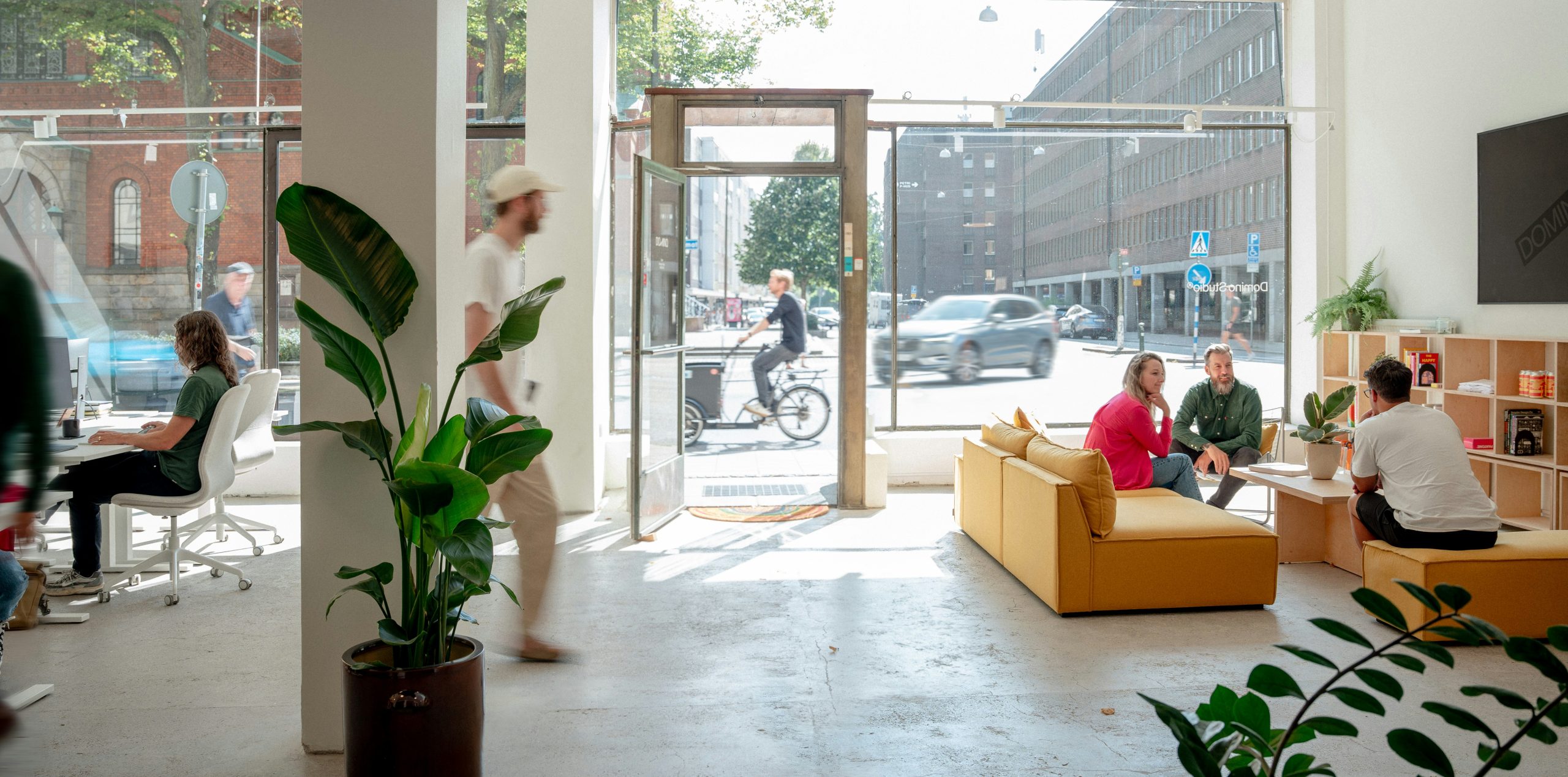
Find and hire the right design agency for your project.
Read →Explore more insights and discover top-rated design partners. Browse our curated lists of leading UI/UX agencies, compare ratings, and find the right fit for your next project.
Top UX/UI agencies crafting visually-driven, creative digital experiences for cultural, lifestyle, and artistic brands.
Leading design teams building modern, scalable product experiences for software and technology-focused companies.
Explore the top UX/UI agencies across the United States, known for innovation and high-quality product design.
A curated list of SF's best UX/UI agencies powering world-class startups, tech companies, and growth-focused products.